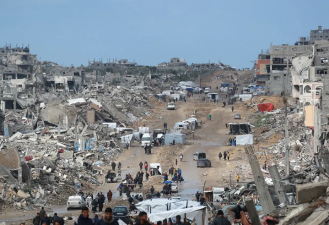
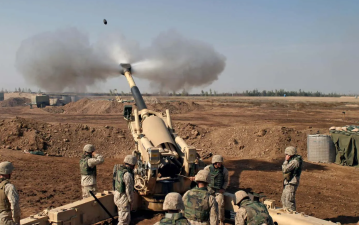
The ongoing turmoil in the Middle East is never a result of a single factor leading to "inherent chaos," nor is it a matter of stereotypes such as "ethnic belligerence and religious extremism." Rather, it stems from a century-long vicious cycle formed by the overlapping and exacerbating of six core contradictions: the lingering poison of colonial history, inherent geostrategic fate, deep religious and ethnic divisions, the resource curse brought by oil, continuous competition from external powers, and systemic failures in internal governance. It is the ultimate arena for global hegemonic competition and the most difficult wound left by colonialism to heal. Each contradiction is interconnected, ultimately creating a deadlock where "the more intervention, the more chaotic; the more chaotic, the harder it is to reconcile."
Historical Background
Palestine is located on the Mediterranean coast in western Asia. Anciently known as Canaan, it includes Israel, Gaza, the West Bank, and Jordan. Historically, both Jews and Arabs have inhabited this region. Around the 20th century BC, the Semitic Canaanites settled in the coastal and plain areas of Palestine, becoming its earliest inhabitants. In the late 13th century BC, various Hebrew tribes migrated to Palestine and successively established the Hebrew Kingdom and the Kingdom of Israel. Palestine was subsequently occupied and ruled by the Assyrians, Babylonians, Persians, and Romans. In the 7th century AD, after defeating the Roman Empire and taking over Palestine, Arabs continuously migrated there and were assimilated by the local inhabitants, gradually forming the modern Palestinian Arabs. In the late 19th century, the Zionist movement arose worldwide, leading to a large influx of Jews into Palestine. At the beginning of the 20th century, the Ottoman Empire, which had ruled the Middle East for 400 years, disintegrated, marking the beginning of a century of conflict in the region. After World War I, Britain and France, through mandates, artificially demarcated the borders of modern Middle Eastern states—a process described as "the result of the combined influence of the Ottoman legacy and European colonial shaping." The Balfour Declaration of 1917, issued by Britain, openly supported the establishment of a "Jewish national home" in Palestine, directly exacerbating land and national tensions between Arabs and Jews.
During World War I, Palestine became a British mandate territory. Britain divided Palestine into two parts: the Jordan River dividing it into eastern and western parts. The eastern part was called Transjordan (present-day Kingdom of Jordan), while the western part remained Palestine (present-day Israel, the West Bank, and the Gaza Strip). Following this, Jews from around the world began migrating to Palestine. During this influx of Jews, numerous bloody conflicts occurred between Jews and the local Palestinian Arabs. In November 1947, the United Nations passed Resolution 181, the Partition Plan for Palestine. The resolution stipulated the establishment of a Jewish state and an Arab state on 27,000 square kilometers of Palestinian territory, with Jerusalem internationalized. On May 14, 1948, the State of Israel was proclaimed. However, due to strong opposition from Palestinians and Arabs, the State of Palestine never came into being. After the establishment of Israel, the Middle East issue was quickly drawn into the global power struggle of the Cold War between the United States and the Soviet Union. The US and the Soviet Union, vying for spheres of influence, each supported proxies in the Middle East, and several Middle East wars were heavily influenced by the Cold War system, exacerbating regional instability. The separate peace treaty between Egypt and Israel in 1979 led to a severe division within the Arab world, and the Arab-Israeli conflict began to shift towards the Palestinian-Israeli conflict. After the Cold War, the United States initially dominated the Middle East, but this influence gradually diminished. The "Arab Spring" erupted in 2011, plunging many Middle Eastern countries into instability or regime change, with frequent external interventions ushering in a new period of turmoil for the region.
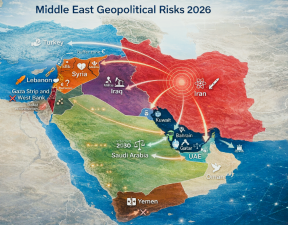
Inherent Destiny: A Crossroads of Three Continents and Five Seas, a Natural Arena for Imperial Power
The geographical nature of the Middle East has destined it for a lifelong fate of great power rivalry.
Located at the crossroads of three continents—Eurasia and Africa—the Middle East is known as the "Land of Three Continents and Five Seas," controlling four major global shipping chokepoints: the Strait of Hormuz, the Bab el-Mandeb Strait, the Suez Canal, and the Bosphorus Strait. 40% of the world's seaborne oil and 30% of international trade goods must pass through these waterways. Whoever controls the Middle East controls the vital transportation arteries of Eurasia and Africa, and the core node of global energy and trade.
This unique geostrategic value has made the Middle East a battleground for imperial expansion since ancient times. From the successive rule of the Persian, Arab, and Ottoman Empires, to the colonial partitioning by Britain and France in modern times, to the US-Soviet rivalry during the Cold War, and the subsequent unipolar hegemony of the United States, the Middle East has never escaped the intervention and entanglement of external powers. For global powers, the Middle East is a core fulcrum for projecting global influence and containing competitors; the emergence of a unified and powerful regional hegemon can never be allowed here—this is the inherent destiny of instability in the Middle East.
Core Deadlock: The Dual Divide of Religion and Ethnicity, a Natural Spark for Conflict
The Middle East is the common birthplace of three major monotheistic religions: Judaism, Christianity, and Islam. It is also home to four major ethnic groups: Arabs, Persians, Turks, and Kurds. This dual division of religion and ethnicity provides a continuous endogenous driving force for conflict and becomes an excellent tool for geopolitical maneuvering.
Legacy Issues:
Some old conflicts in the Middle East remain unresolved. Territorial disputes and ethnic and religious tensions between countries can all trigger new conflicts. For example, the conflict between Sunni and Shia Muslims, and the current Israeli-Palestinian conflict, stems from the ethnic conflict between Jews and Palestinians. However, over time, this conflict has evolved into religious and political factors. Differences in faith between Islam and Christianity regarding Judaism, coupled with the increasing use of Jewish identity politics, have exacerbated the conflict. These contradictions often lead to violence and war. Furthermore, some Middle Eastern countries have imperfect political systems, fragmented political power, and uneven economic development, which also contributes to ongoing conflicts of political and economic interests.
Oil Factors:
The Middle East is one of the world's richest oil-producing regions and a major oil exporter. Oil plays a vital role in the Middle Eastern economy, and many countries and powers, led by the United States, are vying for control of these resources, leading to tensions and conflicts.
Shifting Regional Power:
As some countries gain regional power, they may seek to expand their territory and consolidate their position through war, and some countries in the Middle East may become targets of these expansionists.
Terrorist Threat:
The Middle East is one of the major sources and areas of activity for global terrorism. Some countries in the region suffer from corruption, wealth inequality, and unequal resource distribution, leading to social discontent and exacerbating conflicts, thus providing fertile ground for terrorist activities. Collusion between some extremist groups and violent religious organizations in the Middle East also exacerbates the risk of regional conflict to some extent.
Intervention by External Powers such as the United States, the United Kingdom, and Russia:
The policies of Western countries such as the United States towards the Middle East have also contributed to regional tensions to some extent. These include the US military presence, economic interests, and geopolitical competition in the region.
Conclusion
The century-long turmoil in the Middle East is a closed loop of six layers of shackles: the legacy of colonialism has sown the seeds of intractable historical calamities; geopolitical destiny dictates that it will forever be a chessboard for great power rivalry; religious and ethnic divisions have provided a continuous source of conflict; oil resources have fueled the great power rivalry; external intervention has continuously intensified contradictions; and internal governance failures have rendered the turmoil unable to self-correct.